
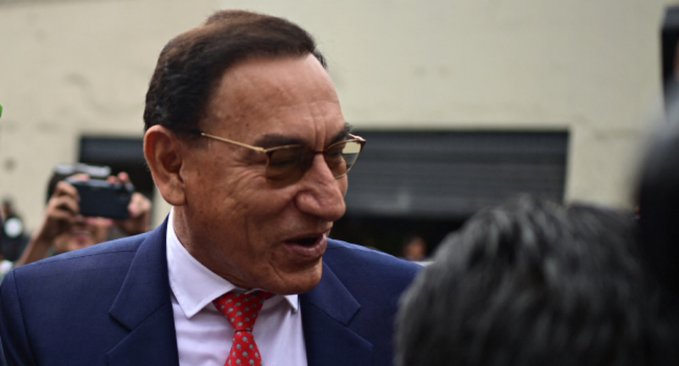
Peru has once again been shaken by a major political scandal as former President Martín Vizcarra has been sentenced to 14 years in prison for corruption. The ruling, delivered by a Federal High Court in Lima, found Vizcarra guilty of accepting bribes from construction companies during his tenure as governor of Moquegua between 2011 and 2014. Prosecutors revealed that the payments, estimated at over $600,000, were linked to lucrative public works contracts, including the Moquegua Hospital and Lomas de Ilo projects.
In addition to the prison sentence, Vizcarra has been banned from holding public office for nine years, effectively ending his political career. The trial, which began in October 2024, concluded in November 2025 with the court siding with prosecutors who had initially sought a 15-year sentence. Vizcarra has consistently denied the charges, claiming that the case was politically motivated and part of a campaign to discredit his reformist legacy.
The conviction adds Vizcarra to a growing list of Peruvian leaders who have faced jail time for corruption, including Alejandro Toledo, Ollanta Humala, Pedro Pablo Kuczynski, and Alberto Fujimori. Analysts argue that while the ruling demonstrates Peru’s judiciary is willing to hold leaders accountable, it also highlights the deep-rooted corruption that has plagued the country’s political system for decades.
For many Peruvians, Vizcarra’s downfall is particularly symbolic. He rose to power in 2018 as a reformist who promised to fight corruption after the resignation of Kuczynski. His impeachment in 2020 by Congress amid graft investigations marked the beginning of his decline, and his sentencing now cements his place among disgraced leaders. The case underscores the fragile trust between citizens and political institutions, raising questions about whether Peru can truly break free from its cycle of corruption scandals.