

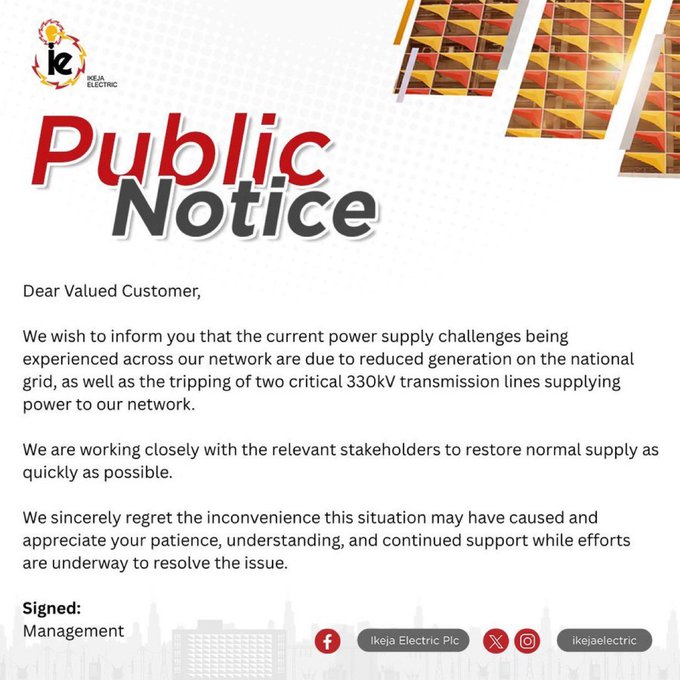
The announcement from Ikeja Electric that reduced generation and the tripping of two critical 330kV transmission lines are behind widespread outages is more than a routine service update. It’s a snapshot of how fragile Nigeria’s electricity ecosystem remains, and why the ripple effects matter far beyond a blackout in Lagos.
At its core, the disruption highlights the interdependence of generation, transmission, and distribution. When power plants underperform and transmission lines collapse, distribution companies are left with little choice but to ration supply. For millions of households and businesses, this translates into stalled productivity, interrupted digital lives, and mounting frustration. But the bigger picture is about trust in infrastructure. In a country positioning itself as Africa’s tech and creative hub, unreliable electricity undermines both ambition and influence.
Entertainment and culture industries feel this pinch acutely. Streaming platforms, music studios, fashion houses, and digital creators rely on stable power to produce and distribute content. Every outage is not just an inconvenience—it’s a brake on Africa’s growing presence in the global creative economy. For young Nigerians building brands on TikTok, YouTube, or Spotify, electricity is the invisible backbone of influence. Without it, the promise of the creator economy stalls.
There’s also a branding dimension. Nations are increasingly judged by their ability to support innovation and attract investment. Frequent grid collapses send a signal to global partners that Nigeria’s infrastructure is not yet aligned with its cultural and entrepreneurial energy. That gap between talent and systems is where frustration grows, but also where opportunity lies.
Why it matters is simple: electricity is no longer just about keeping the lights on. It’s about enabling Africa’s cultural exports, sustaining entertainment economies, and powering influence in a digital-first world. Until Nigeria stabilizes its grid, every blackout is a reminder that creativity and commerce remain hostage to infrastructure.


