

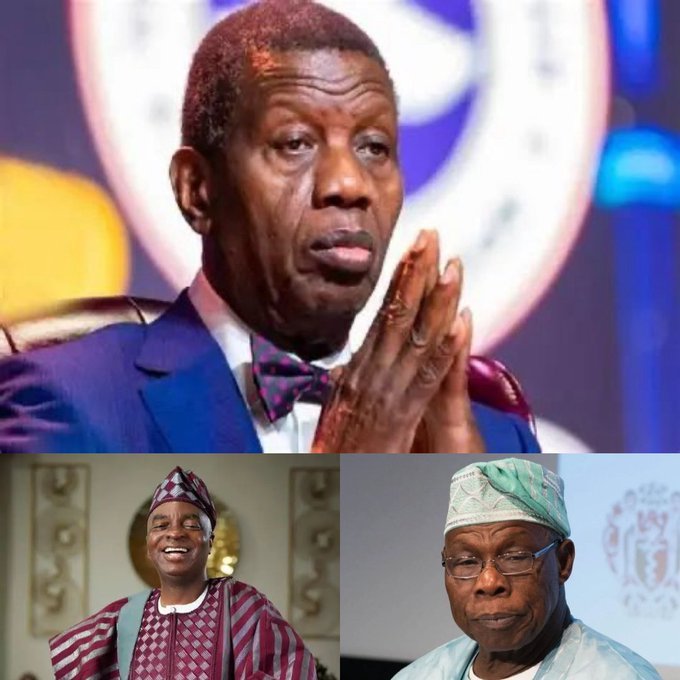

Three of Nigeria’s largest Christian denominations, the Redeemed Christian Church of God (RCCG), Living Faith Church Worldwide, and Deeper Christian Life Ministry, have dismissed claims that their leaders received oil wells from former President Olusegun Obasanjo during his administration.
The churches were responding to allegations that have circulated in public discussions and on social media, suggesting that prominent religious leaders benefited from the allocation of oil assets while Obasanjo was in office. The religious organizations have categorically rejected the claims, maintaining that the allegations are false and unsupported by evidence.
The controversy touches on a sensitive subject in Nigeria, where religion, politics, and influence often intersect. Faith leaders command significant followings and wield considerable social influence, making claims about political favoritism or economic benefits particularly consequential. As a result, allegations involving major religious institutions frequently attract widespread attention and scrutiny.
Beyond the immediate denials, the debate highlights a broader conversation about transparency, accountability, and the relationship between powerful institutions in Nigerian society. Religious organizations remain among the most trusted and influential bodies in the country, playing major roles in education, healthcare, humanitarian efforts, and community development.
The public reaction to the claims also reflects the growing role of digital platforms in shaping national conversations. Unverified reports can spread rapidly online, placing pressure on institutions to respond quickly and protect their reputations.
For many observers, the significance of the story extends beyond whether the allegations are true or false. It demonstrates how questions surrounding wealth, influence, and public trust continue to shape discussions about leadership in both religious and political circles across Nigeria.